Opening Reflection
Kelly Beth Cosby lived with a rare combination of compassion, courage, and joy. From childhood through her work as a young lawyer, she believed deeply that every person deserved dignity, kindness, and a voice. Whether helping a new student feel welcome, standing up for those being treated unfairly, or advocating for human rights around the world, Kelly lived by a simple but powerful philosophy: always do everything with love.
Her life reminds us that one person truly can make a difference — one act of kindness, one moment of courage, and one life at a time.
Featured Story
Some people leave behind accomplishments. Others leave behind something even more powerful — a way of living that continues to guide and inspire others. Kelly Beth Cosby did both.
From an early age, Kelly had a natural instinct to notice people who felt left out. She loved spending time with friends, but if she saw another child excluded, it troubled her deeply. She simply could not enjoy herself if someone else felt invisible. That instinct to empathize with others would become one of the defining characteristics of her life.
One childhood story captures this spirit beautifully. When a new student arrived at school from Ecuador and spoke very little English, Kelly’s teacher asked her to help the girl adjust. Kelly did far more than assist with schoolwork. She walked with her through the lunch line, introduced her to classmates, and made sure she felt welcome in a completely unfamiliar place. Within days, the girl felt so comfortable with Kelly that she moved her desk beside hers during class — a silent but powerful expression of gratitude and trust.
As Kelly grew older, her courage to stand up for others became even more evident. She defended classmates who were bullied, invited those who had been excluded to join in, and spoke up when she saw someone treated unfairly. These actions were never about recognition. They simply reflected who Kelly was — someone who believed every person deserved respect and kindness.
In high school, Kelly’s compassion expanded into a passion for justice. She created a Social Justice Club to raise awareness about global human rights issues and organized efforts to support causes such as relief efforts in Darfur. Her belief that ordinary people could help create a more just world was already taking shape.
At the University of Kansas, Kelly continued to grow as both a student and an advocate. She became a leader in Amnesty International, served as a student senator, and wrote opinion pieces for the University Daily Kansan addressing issues such as the death penalty, domestic abuse, and international human rights. Her writing and leadership reflected a deep conviction that justice and human dignity mattered not just in theory but in everyday life.
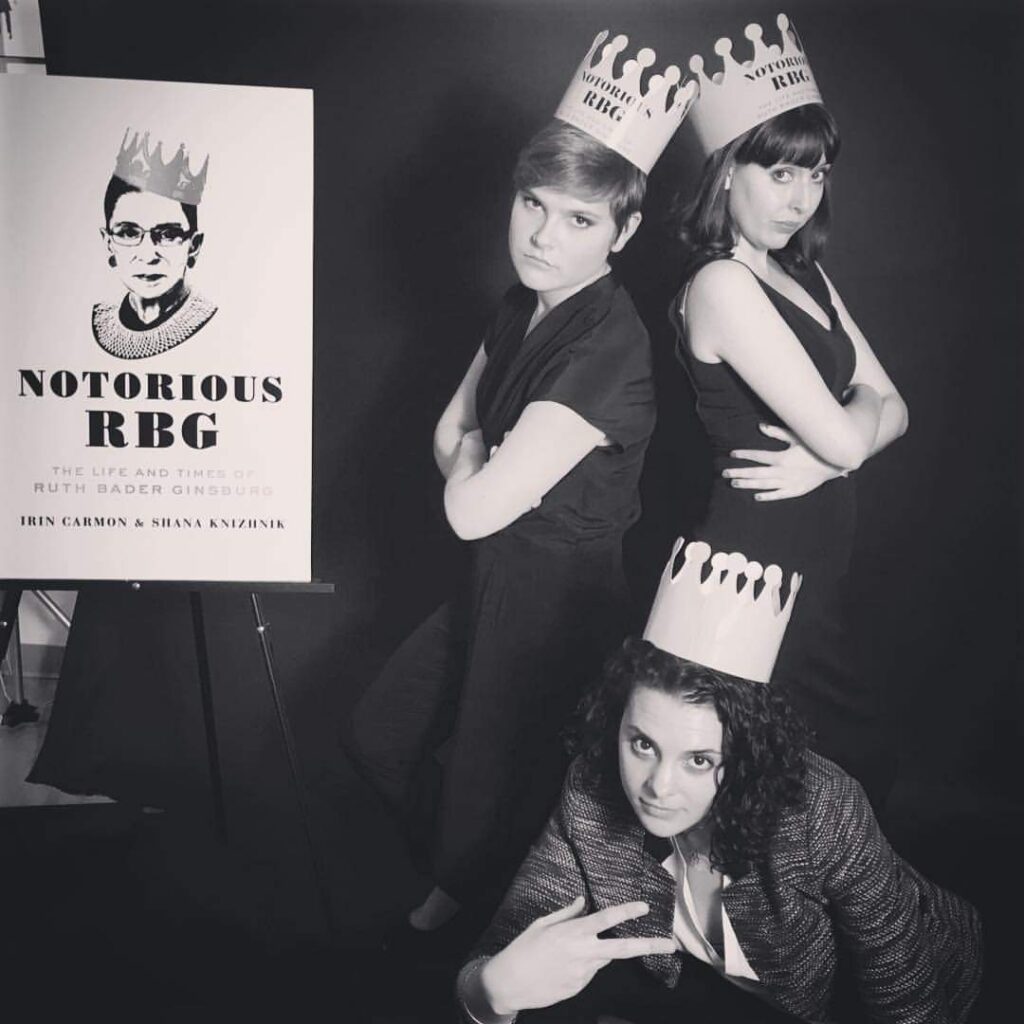
Yet Kelly was never defined only by her seriousness of purpose. She loved music, theater, creativity, and laughter. Friends remember her energy and enthusiasm as much as her intellect and determination. While attending New York University School of Law, Kelly helped produce and perform in the school’s Law Revue and co-wrote and performed in the viral rap tribute “Notorious RBG,” celebrating Supreme Court Justice Ruth Bader Ginsburg. These moments reflected the joyful and creative spirit that was always part of who she was.
Kelly’s legal career was just beginning when she faced one of life’s most difficult challenges. Diagnosed with melanoma while still in school, she continued pursuing her goals with remarkable strength and determination. Despite the physical toll of treatment, Kelly completed law school, passed the bar exam, and began her career as an attorney in New York. Those around her were inspired not only by her perseverance, but by the positive spirit she maintained even during the hardest moments.
In recognition of her extraordinary dedication, the Appellate Division of the Supreme Court of the State of New York took the rare step of admitting Kelly Beth Cosby to the New York Bar posthumously. During the ceremony, the court reserved an empty seat in the courtroom to represent the young lawyer who had earned her place through determination, discipline, and unwavering good spirit.
Kelly’s life reminds us that influence is not measured by the number of years we live, but by the lives we touch. Through her kindness, courage, and deep commitment to justice, Kelly Beth Cosby showed that one person truly can change the world — one act of compassion at a time.
Kelly’s Personal Mission Statement
Following Kelly’s passing, her family discovered a personal mission statement written in her journal. The words capture beautifully the principles that guided her life:
Always do everything with love.
Be compassionate, give to others, and live with integrity.
Be a force for good in the world.
Keep promises to myself and others.
Appreciate life and be in the moment.
Spread love to everyone.
These words were not simply something Kelly wrote. They were something she lived.
The Kelly Way Lives On
Kelly Beth Cosby believed that every person has the power to make the world better through compassion, courage, and integrity. Her life was guided by the belief that kindness matters, that standing up for others matters, and that love should guide the way we live.
Following Kelly’s passing, her family and friends created The Kelly Way to carry forward the values that shaped her life. The foundation seeks to inspire others to live according to the principles Kelly wrote in her personal mission statement — to be compassionate, appreciate life, keep promises, and be a force for good in the world.
Through acts of service, advocacy, and encouragement, The Kelly Way reminds people that even the smallest acts of kindness can create lasting impact. Every time someone chooses compassion, stands up for someone in need, or takes a moment to appreciate the gift of life, Kelly’s spirit continues to live on.
Her life may have been far too short, but the example she set continues to inspire others to live with purpose, generosity, and love.
And in that way, The Kelly Way continues.
Show Less


11 Tributes
Negativity and divisiveness have been unfortunately difficult to ignore in recent memory. I dare not associate such forces with the name of one of the purest, gentlest souls that I’ve ever had the good fortune of calling a close friend. Rather, I wish to channel Kelly’s sparkling spirit to highlight what it means to create positivity. I confess; I feel a great deal of pressure writing something that is to be released on the anniversary of her passing. I’ve never been particularly eloquent, nor have I ever been good about expressing my emotions—certainly not in written form. But on to the ever-important question: How can we create positivity? I’m a big believer in starting small:
Smile at a stranger. Say something nice to him or her!
Tell someone that you are grateful for his or her presence in your life.
Engage in conversation with and LISTEN to someone that you disagree with.
Bring people together and forge new friendships.
Buy a coffee for the person behind you at your favorite coffee shop.
The ever-quotable Chris Hadfield, who you may know as the astronaut that brought us David Bowie’s “Space Oddity” FROM SPACE, says: “It is not the end goal that changes you, but the summed total of each of the small, daily decisions”. The few examples I’ve listed above are, of course, a very small subset of the infinite number of positive daily decisions we should all strive to make. I won’t lie—I fit the mold of “grumpy New Yorker” quite well. I tend to avoid eye contact, keep to myself, and get from point A to point B as quickly as possible. Kelly… not so much. I can’t NOT associate Kelly with being an effulgence of positivity that brought everyone around her up. Even more staggering is that while Kelly excelled at the small bursts of goodness, she also devoted herself towards the long-term cause of social justice for people half a world away. Kelly possessed the rare combination of being both intellectually and emotionally mature far beyond her years — something that has been true ever since I’ve known her. I wish this was something that I had possessed when I had known her. While I spent most of high school perfecting the art of slaying virtual monsters, she was encouraging our classmates think about how to solve important and complex problems through her social justice club. While I was honing my skills as a Dance Dance Revolution master, she was pouring her heart and soul into writing about peace in Darfur, Sudan, and South Sudan. It is rare enough for someone to be so engrossed in the problems of those in distant places, but I could not begin to count the number of times Kelly made herself available to support those around her… myself included! Look no further than this many other blog posts here to see how she has deeply has influenced us all.
In my daily attempts to journal and purge the negative thoughts from my system, there is no person more emblematic of the positive energy than Kelly. Thus, every morning, I thought it would be appropriate to schedule a programmatically generated email as follows:
FROM: Myself
SUBJECT: Write about today!
BODY: “Remember Kelly. Channel her in everything that you do, and both you and the world will be a better place.”
Kelly fought for justice with unrivaled passion—it is life’s cruelest irony that she, like my mother, was taken from us so abruptly by such an unjust disease. As with all things, however, there is a silver lining. In the words of the great Albus Dumbledore, “After all, to the well-organized mind, death is but the next great adventure.” As Kelly’s great and eternal adventure continues, it brings me joy to think that she must be smiling at how profound her legacy is—how many people her spirit inspires, how much joy she brought to the world in such a short time, and how she will never, ever be forgotten.
Finally, I will end on a quote that I discovered in my own attempts to cultivate a more mindful and positive attitude. I’d like to think Kelly would have enjoyed this, too:
“May my enemies be well, happy, and peaceful; may no difficulties come to them; may no problem come to them; may they always meet with success. May they also have patience, courage, understanding, and determination to meet and overcome inevitable difficulties, problems, and failures in life.”
―Henepola Gunaratana, Mindfulness in Plain English
I miss you, Kelly. I can’t wait to come home and bring you flowers.
In August of 2015, Kelly wrote the blog post, “Life Isn’t Fair”. In the post, she processed her melanoma diagnosis in the context of the privileges she had been afforded in the other areas of her life.
Much like Kelly, I have been afforded so much privilege. I have grown up white, upper-middle class, heterosexual, cis-gendered, able-bodied, Christian, and in the United States. Life isn’t fair, but I am on the receiving end. When Kelly died, it felt at first like that changed. Something wasn’t fair, and this time I got the short end of the stick. In the wake of her death, I sat with similar questions to what that Kelly posed on her blog.
“I’ve been extremely fortunate, privileged, had everything handed to me. I’ve never had to go through anything very difficult. Does that make this less fair, because I’m less equipped to handle adversity? Does it make it more fair because I’ve had everything else so easy?”
Even as my mind whirred with these thoughts, I had the wisdom Kelly shared just after that paragraph. She knew that wrestling with how life is or isn’t fair wasn’t the right approach.
“Cancer isn’t fair. Neither is it fair that people, children and adults, are murdered for being black. Murdered for being trans. Murdered for being gay. Terrorized for no good reason because some privileged person has decided they are inexplicably less than human…Life isn’t fair, and to get caught up in the unfairness of my diagnosis is to ignore what happens around me every day.”
I have tried to apply that same sentiment in grief. Losing Kelly has been hard. It’s still hard. But in the year since Kelly’s death, I have been overwhelmed by the number of people around me that are also struggling with loss or the fear and sadness that come with a cancer diagnosis of a loved one. I just had to start paying attention and caring more deeply for the people around me.
I recognized this first in the week after Kelly’s funeral. I returned to a tutoring program I volunteer with weekly during the school year. My tutee, Alex*, came to tutoring out of sorts. After some coaxing, she revealed that her cousin had been shot and killed. As she found the words to share this with me, tears rolled down her cheeks. Soon she stopped talking and we sat together while she cried.
I knew how to sit with Alex and feel the pain of loss that night. Alex reminded me that I wasn’t alone in this experience. But even in our mutual grief, there were stark differences in the losses we suffered. Alex is a ten year-old, African American child. Her cousin was murdered. As I walk through the world with white skin, I will never know the pain and fear that Alex shared with me at tutoring that night.
It is not a coincidence that Alex and I have markedly different childhoods. African American children are more likely than white children to live in poverty and less likely to have a mother with a college degree. These differences translate into real educational and health disparities. Despite living in the same nation, African American and white children face drastically unequal realities—the same amount of effort does not yield the same opportunities. That isn’t fair.
I don’t always act in a way that recognizes and works towards rectifying these discrepancies. It is a goal I strive towards, to show compassion for the struggles of others. I am going to have to work at it each day.
Kelly’s words are on the bulletin board of my office. For me, they are a prompt each morning to be more compassionate than I was the day before. Her mission statement challenges us all to do the same.
I’ve never felt myself to be a particularly good writer. I often joke that’s why I’m an actor—the words are already given to me. I just fill in the spaces.
Kelly was alive for 25 years and I knew her for about 10 of those years. I loved her more than I can say. And still do. To say Kelly did everything with love would be a huge understatement. Kelly was love.
Kelly’s whole family was love. They have taken me in and treated me like a daughter and I will always and forever consider the Cosby’s a second family.
Anyone who knew Kelly knew how full of love she was. She was everyone’s biggest champion. She saw every play of mine (three, four and sometimes five times) and would always wait for me in the theatre lobby and throw her arms around me as soon as I emerged from the dressing room, immediately showering me with praise and love. I remember one day, I was understudying an actress in an off-Broadway production of Saint Joan and found out I was going on thirty minutes before the show started. I texted Kelly with the information and low and behold, she was at the theatre with a ticket in hand ten minutes before curtain. She did all of this, mind you, while being a grad student at NYU.
Kelly and I did many shows together in high school- often playing the mothers of the other characters (I guess we had a “mature” thing going on). We bonded in our rehearsals and cast parties. We would drive each other to call time for our shows and sing show tunes in my Chevy Malibu (which I so appropriately named Liza Minelli, Liza for short) for hours. We reconnected when Kelly moved to New York to go to law school at NYU. I was always so proud of her. I would introduce her to everyone as “my amazing friend who was going to law school to change the world” and I really meant it too. We were each other’s biggest fans.
I chose this prompt because Kelly absolutely did everything with love. She treated everybody with love. She lived life with unprecedented, unparalleled love.
Especially in this time of fear of darkness in our country, do everything with love. Treat everyone with love. Live life with unprecedented, unparalleled love.
“I know it doesn’t seem that way, but maybe it’s the perfect day.”
–Ron Sexsmith, “Gold in Them Hills”
Much of the beauty of the Be The Light habits that Kelly crafted is their combined simplicity and difficulty. “Appreciate life”—it seems so obvious that we should find a way to be grateful for each day and for each new experience, and yet so many people fail to do exactly that.
Kelly was not one of those people.
Living with Kelly while we were both students at KU taught me one lesson very quickly: Kelly Cosby could pack more into one week than eight other average human beings put together, and she could do it with a frenetic sort of grace that only she seemed to possess. She somehow juggled a daunting schedule and an impossible number of other activities while still managing to be the best kind of friend to everyone. Unlike so many others, Kelly seemed to always be able to appreciate the moment, even if she was dashing from one student organization meeting to the next, and she always had time for the people she loved. Always.
For Kelly, appreciating life was synonymous with appreciating others. Sure, her schedule was busy and she found great joy in the meaning of her academic, professional, and other pursuits, but her deepest joy clearly came from being with, helping, supporting, and interacting with others. Her interest in appreciating life allowed her to appreciate the lives of others in the purest of ways – when something good happened to someone she loved, she celebrated if it had happened to her, too. I admire so much about Kelly, but that genuine selflessness that allowed her to be the champion of everyone she knew and loved really blew me away. She never seemed jealous of others’ opportunities or experiences. She never seemed inconvenienced by what others asked of her or wanted her to do. She was just happy to be a part of their lives. She appreciated them.
I felt this many times in my friendship with Kelly, probably most of all when I got married. Kelly was also good friends with my husband, Jeremy, since we were dating while Kelly and I lived together at KU, and when I texted her to tell her that we were engaged, I could feel her excitement radiate all the way from New York City. I worried that Kelly may not be able to take the time out of her busy law school schedule to attend our wedding in KC. I shouldn’t have worried, of course—she told me so sincerely how much she loved both of us and how she wouldn’t miss it. She took time away from law school and her busy schedule to be there for us.
When I think back to walking down the aisle, I remember a sea of smiling faces pointed in my direction, but you can probably guess that Kelly’s stood out among the rest. I remember making eye contact with her and I remember her beaming at me in the way that only Kelly really could, her eyes bright and happy.
She felt the beauty of that moment, of my journey down the aisle on my wedding day, right along with me.
In the spring of 2015, Jeremy and I were traveling to the East Coast and planned to spend a few days in NYC at the end of May. When I texted Kelly and asked if we could spend a day with her, I received the usual enthusiastic reply—“YES PLEASE COME TO NEW YORK I’M SO EXCITED I WILL BE SURE THAT I’M FREE THAT DAY I LOVE YOU GUYS SO MUCH YOU ARE MY FAVORITE PEOPLE I CAN SHOW YOU SO MANY WONDERFUL PLACES TO EAT YAYYYYYYYY!!!”
Or, you know, something along those lines.
But she’d been sick for the past few weeks, and when we arrived, we had to change our plans. She had gone to the doctor and she already knew that bad news was waiting for her, that her cancer had probably returned. Instead of a day of adventuring, we sat in Washington Square Park with Kelly and her lovely mother and then we had gelato together around the block. We talked about Mad Men and traveling and our younger brothers, and everything felt pretty normal.
Except it wasn’t, of course. The next few days changed everything for Kelly.
But that was who Kelly was. Yes, she was always so positive and optimistic about her illness, but I can’t even imagine how she was feeling that afternoon, glancing at her phone and wondering if it was about to ring and deliver terrible news. In spite of all of that, though, she hugged us fiercely and laughed and chatted with us like she always did, eager to hear about what was new in our lives. So many people would have just told us that they didn’t feel up to socializing that day. Not Kelly. She took the opportunity to spend time with us, in what would ultimately be the second-to-last time we ever saw her. She let us make another precious memory from a short afternoon in the park, and she chose to appreciate her time with us rather than waste the day worrying about the bad news looming on the horizon.
This was true again when we saw her that August, when she was sicker, really, but feeling pretty good. I marveled at how normal she seemed, sitting there grinning at us in her Royals t-shirt. She confidently told us about her cancer treatments with her usual energy and enthusiasm, and that was that – the evening was about the three of us having fun together, not her illness.
I never imagined for one second that I would never see her again. Her positivity seemed to make that an impossibility.
Now, as we remember her, I marvel at just how much Kelly continued to appreciate her own life and the lives of others, even when it would have been so easy for her to be angry and bitter and hurt by the way her body betrayed her. That wasn’t her nature, of course, and through it all, she was an example to all of us. She showed us how even in the worst of circumstances, there are people to be loved and moments to be enjoyed.
I teach high school English, and my juniors recently read an excerpt of “Walden” by Henry David Thoreau. In case you haven’t brushed up on your Transcendentalist philosophy lately, Thoreau was a big fan of appreciating life. He writes in “Walden” that he “wished to live deliberately … and not, when I came to die, discover that I had not lived. I did not wish to live what was not life, living is so dear; nor did I wish to practice resignation, unless it was quite necessary. I wanted to live deep and suck out all the marrow of life.”
Kelly did this. She did all of these things even when she could have easily ‘practiced resignation’ or lost sight of the positive—even when her world was darkening, she shone brightly.
So here I am, my life continuing after Kelly’s, and I’m trying to learn from her example. I chose to write about this Be the Light Habit because, as much as I believe in it, this is something that can be difficult to for me. When I face big changes or challenges, I can suffer from pretty severe anxiety. When I tackle my own busy schedule, I do so by obsessively planning. I’m not lying when I say that I know exactly how many papers I need to grade each day for the rest of the semester to be sure I stay on top of everything at work. I write in my planner like my life depends on it. I get caught up in setting goals for myself and trying to prepare and calculate and predict what is coming as if it all were some sort of certainty.
In pursuit of the Next Big Thing, I forget to appreciate the quiet moments of right now.
I know I’m not alone in this. We can all look to Kelly as a model. Losing her has been a painful lesson in reaching out to others now, not waiting because today we just feel too busy. For the rest of my life, I will wish that I had devoted more of the past six years of my life to Kelly. Living halfway across the country from each other made it hard to see her more than a few times a year, but I will never stop telling myself that I should have called her more. I shouldn’t have worried that she was maybe too busy for me. This is true for all of my friendships, though – for all of the friends I have scattered across the country today. I need to call them more often, need to plan the time to connect with them in my busy schedule. For all the goals I set for myself, nothing makes me feel more fulfilled than time with the people I love. I need to put the same level of energy that I put into tackling my daily to-do list into planning to appreciate life and the lives of others. Kelly understood this clearly: the best way to appreciate life is to appreciate the wonderful people who fill my days.
Beyond appreciating others, I’m committing myself to appreciating my routine and busy days. My dear friend Melanie recently introduced me to the movie About Time (if you haven’t seen it, you are missing out) – the entire premise of the film is that each day deserves to be remembered and treasured, even if it feels tedious or routine. We can so easily miss the beauty of today by only seeking the reward of tomorrow. I’m trying, though. When I feel too tired to schedule plans with friends after a long day of teaching, I will think of Kelly. I will remember how she was never too busy for anyone, and I will see all of the people that she loved so deeply and that loved her so much in return that stand as a testament to her ability to spend her time and energy on things that mattered deeply to her. Appreciating life is more than stopping to smell the roses. It’s building a web of connectedness; it’s showing the people that you see everyday that they are appreciated and worthwhile and loved. It’s seizing opportunities in your own life, but it’s also celebrating those opportunities as they come to the ones you love. I’m confident that if we all try to do this a little more often, we will make Kelly proud.
For me, Kelly is a bright light in a dark room—heck, a bright light in any room. When I was happy, she was right there ready to magnify, and when I was sad, she was a hug waiting to happen. For all the years I knew her, she always seemed to have a divining rod for darkness: finding and illuminating the injustices suffered by the downtrodden, disenfranchised, marginalized, or targeted. My first glimpse of Kelly’s knack for this came in high school, in freshman debate, when we learned about the Rwandan genocide and discussed the extent to which the US should support UN Peacekeeping operations. Kelly’s debate just had a way about it, imputed with this fervor and expression that these stories were more than words on a page; they were people. The next year, the topic was unlawful detention, and that same fervor was present again in Kelly’s argument. No matter what the group or what the distance, it was as though Kelly’s heart was being shared with them.
This is the same feeling I always felt when Kelly was in the room—that her heart was being shared with me and with all of us. It didn’t matter if it was one-on-one or in a group. With Kelly, everyone was included; everyone had value and a voice; everyone mattered. This is one of the things I miss most about her and work ardently to seek out and to emulate. Sometimes when I’m in a random place and I least expect it, someone will do something or say something that is just “so Kelly” and, all of the sudden, I’m awash with a warmth and comfort of a friend in the room. A couple years ago, I was a press intern for the First Lady, and as I’m standing in the back of this ballroom full of kids and press and staff, the First Lady is up front taking questions from the kids. She selects a ten-year old girl in the front row named Charlotte, who stood up, went to the First Lady, handed her a piece of paper, and in a flurry of words said “my dad’s been out of a job for three years and I wanted to give you his resume.” The First Lady, without missing a beat, knelt down, gave Charlotte this engulfing embrace, and assured her “I got it.” So Kelly.
I’ve been working lately on a pro bono asylum case with a couple of attorneys, and the other day, one of them called me. I was buried in work, but answered like I always do, in a sort of chipper “how’s it going?” kind of way. We talked for maybe a minute, and then, out of the blue, the attorney asks me if everything is okay. She said I sounded stressed and asked if I’m being overworked or need a hand. It didn’t matter that she had way more on her plate than I did, that my work is not hers to do; she just heard it in my voice and offered a lifeline. So Kelly.
I try every day to see people and help people and listen to people the way Kelly did so naturally. While I’m nowhere near as good at it, I know that every bit of effort I put toward that goal is a positive step. Even though I will likely never be Kelly-level at this, it’s the little steps: helping others, speaking kindly, being compassionate. In the same way that one voice at a rally may seem inconsequential or like never enough, when paired with the other voices speaking out for the same cause, carrying forward the same positivity and the same light, that one voice is powerful. Kelly’s light was ultraviolet; we all know it. And if we strive to be ultraviolet, we may get there. Whether we get to that level or not though, our positive efforts, that positive force will bring light into spaces of the world that otherwise would be shrouded in darkness.
I’m not particularly good at expressing my emotions or sharing, but when Kelly passed, it felt like the lights in my room went off. It was my friends in New York and Kansas City, the warmth of Kelly’s family, and the little sparks of Kelly I see in others that turned the lights back on for me. Being a force for good in the world, to me, is not about scale so much as it is about persistence. Darkness, sadness, and injustice are everywhere, on scales large and small. Wherever you live, whatever you do, whenever you have an opportunity to make something better or make something brighter, if you take that opportunity to bring the greatest force and the brightest light to the situation, not only can we eliminate the darkness, we can inspire others to take up the light and spread it in their own situations and their own world. Sometimes, no matter how much positivity and good we bring to the world, we’ll stumble into black holes ourselves. The really cool thing about all this though is that if you’ve devote time to spreading light to your world and to those around you, those very same people will be there to relight your world.
I heard a lot of adages growing up like “leave things better than you found them,” “to think globally, act locally,” and “always pay it forward”. These sorts of things inspired me to be active in Boy Scouts and Relay For Life, to acknowledge the opportunities and privileges I have been fortunate to receive, and to use those opportunities as a chance to give others a voice, or to spread a positive message as far as possible. Kelly was an exemplar in this area, and I so admire her ability to find these causes and issues and just drive directly at them at 100 miles per hour. Her work with Amnesty International and the Global Justice Center shows Kelly’s immutable dedication to not only being the biggest force for good in her personal world, but to seeking out darkness elsewhere in order to shine light and be a voice in those crowds too. When we’d get together, we’d often talk about people we admired like Bryan Stevenson, Elizabeth Warren, and Justice Ginsburg. The remarkable thing about these individuals is that they spread good in their own spaces and, though some are more vocal than others, the values they represent are clear, the purity of their message is intact, and their positive impact on our national dialogue and forward steps is immeasurable.
What I’ve learned from Kelly is that it doesn’t matter what my area of focus is, what my profession is, where I live, or where I’m from. There is a world around all of us, and if we share love and kindness and compassion with everyone, and if we listen and act in ways that improve the lives of others, the world will be a better place. Kelly showed us the incredible impact one person can make, and if we can take what we’ve learned from her—to be a positive force for good, to be the light—and apply it to our own situations, perhaps we can fashion a world in which we see Kelly in a lot more places in a lot more ways. Then we can always look around and say to ourselves “Ah, so Kelly.”
A Sommelier by profession, I create new bonds and establish trust with strangers every day. I do this knowing that there’s a large possibility that I will never see a guest again. For many of my interactions, I’ll take them on a journey around the world for 2 hours; we’ll learn about cultures, farms, and weather through bottles of wine. At the end of those two hours, I know that we part ways. They may thank me, shake my hand, or offer a hug, but I expect nothing in return. The service industry is, for the most part, a thankless profession. For me, that brief time of truly impacting someone’s experience is my reward. I pride myself on how I approach guest interactions. I want to make them feel that they are at home, comfortable, and with someone who will create a magical experience.
In my life outside of work, I follow a similar mindset with my friendships and relationships; however, I never felt the need for affection. I enjoy keeping in touch with acquaintances and friends who, post-college, parted ways and moved across the country. I will admit to being that friend who will, regardless of length of time apart, text or call you to check in and catch up. I joke that once you let me into your life, I’ll be around forever. I spend hours searching websites and shops for the perfect gifts that I will ship to them as little pick me ups for rough times. I want it to be thoughtful, for them to know that I love them. While living in my small college town, I took time on days off to cook for my friends who would be working, or bring them treats to make their days brighter. I wanted to be described as caring, loving, and to have a warmth about me. I’m fairly certain that I have succeeded in that.
A year ago today, I received a message that would change much of my thoughts on life and love. One of the people that I loved would not be with me. Being Kelly, she apologized for telling me about her condition. Even at that moment, Kelly cared more about my own feelings than what she needed. That was Kelly. She loved everyone she encountered equally, unabashedly, and did so without wanting anything in return. She was selfless.
The following weeks stand still in my memory, almost like photographs of each moment that would, in hindsight, cause me to re-evaluate my relationships with others. I remember profusely thanking a work acquaintance for driving 45 minutes to retrieve me from the airport after I flew to see Kelly. I also remember a moment where he looked at me with all seriousness and told me to stop saying thank you. He was doing this because he cared about me, not just professionally, and that there was no need to thank him. I remember going to work, truly grieving, and having a friend stop by with coffee and a hug. I remember being so overwhelmed with emotion that a friend offered to do my laundry because I didn’t have the energy to do so. I remember a close friend telling me that he didn’t want to see me sad. He told me that anytime I was sad, I should call him and we would watch musicals to take my mind off of things.
I felt overwhelmed; overwhelmed with people showing such kindness, love, and generosity to me. You see, I thrived off of seeing how my love could brighten others’ lives. I never had thought that by putting out that energy, I would receive it back tenfold. Kelly said that nothing could be more worthwhile than being more loving towards others. I agreed, but only partially understood the true gravity of that statement.
After seven years residing in small Lawrence, KS, I was treated to a going away party by a dear friend. Everyone that I loved in town opened their hearts, and wine cellars, for an event as hodgepodge and heartfelt as Rory’s departure from Stars Hollow in Gilmore Girls. I saw that all of the time put into loving others not only made me feel fulfilled, but it created a community that stood behind me with open arms.
It’s only recently that I’ve pieced together all of what makes loving others worthwhile. While spreading love to everyone, you’re in turn spreading love to yourself. It’s a love that you don’t realize in actual time; you don’t see it every day, but you feel it. It’s a love that I know Kelly felt surrounding her when she needed it most. It’s a love that you never expect. But, that is the love that makes spreading love to others so worthwhile.
I have been waiting to meet Kelly for my whole life. It seemed at times that I would never find her. I wanted someone to be friends with me the way I was friends with people, and I was so lonely waiting for her.
My very first memory of her is from my first-year Law Revue audition, when she was producing the show as a third-year student. I left the auditorium to get some water and came across Kelly and another producer who had been feeling sick. Kelly took her away from the crowd to make sure she was okay – doing good even in the in between moments. I later learned that she fought for me to join the cast, soothing worries from the other producers that I was too buttoned up to feel comfortable in a group of people that is happiest when it is causing some sort of ruckus. She saw herself in me, and wanted to give me the same law school home that she had found.
Our law school paths tracked each other, even though I was two years behind her. We are both third-year producers of Law Revue, and lawyering TAs, and we are on the same law school journal. We were both rejected from the law school a cappella group and the international law clinics. I went to Ireland for my 1L summer to do human rights work and she tried to go to London to do the same, but ended up having to stay in New York (which resulted in the Notorious R.B.G. video, so it was ultimately a good thing). Since her death, I have gotten several comments that something I’ve done is “such a Kelly thing to do.” Whenever someone says that to me I am always deeply honored, and completely incredulous. I wasn’t trying to be like her, I was trying to be like myself – she was always so much kinder and friendlier than I could ever hope to be. I am so grateful that I can feel her with me in those moments, when I do something that she would also have done. But in my ungracious and unkind moments, it helps to have her as an example, pulling me forward to the kinder course of action. What would Kelly do?
Kelly would ask herself, what would Mona (her aunt) do? This (“WWMD”) was the title of her blog post when she told us that her cancer had returned. She used this to help herself keep Mona present, and make a little parallel to the fact that Mona would always ask, what would Jimmie (Kelly’s mom) do? When I told Jimmie that, after Kelly’s death, she laughed and said, “It’s always been, ‘what would Kelly do?’! I’ve been saying that since the beginning!”
A few more memories stand out amidst the others during the year I had with Kelly. Walking back to campus next to her after a Law Revue girl’s night in the early spring, talking easily, and feeling like we were actually friends, instead of just cast mates. Seeing her for the first time after her re-diagnosis and a summer apart, and not realizing until I saw her how scared I’d been. Sitting on her couch after eating dinner for her twenty fifth birthday, talking across the room to her as she did her makeup before going to the bar where all our friends were waiting and would cheer when she walked in, and thinking, “Oh my God, I found you. I have been looking for you for so long.”
She texted me that they thought her melanoma had returned as I was waiting in the airport to take off for my summer working in Ireland. I nearly left the airport to go to her. Instead, I spent the summer writing her letters, as many as I could, to keep her company and take her mind elsewhere; my attempt to give her a piece of Ireland. I traded stories of walks in the countryside and my family history for stories of her hospital stays and bar exam studying. It was so hard to be apart.
She texted me again, six months later, that her cancer was terminal and that she only had days or weeks left. I was about to walk into a meeting and when my boss saw me as I reacted to that news, she sent me home. My entire brain was changing to understand that this was now possible, when I had never considered it possible for a moment before. I spent the next two weeks until her death texting her every day, making sure she knew everything I wanted her to, without making her decide to open what would have been my last letter to her. Texting was lighter than a last letter. On November 14th, the day before we lost her, I texted her this: “I want you to know, whatever good I do in my life, it will be in your name. You inspire me to be strong and kind to everyone and I will carry that forever.”
I can hardly bear the thought of living my entire life without Kelly. Missing her is so big. She is still as present to me as she was the day she was last alive, I just carry on the conversation in my head. I like to think that she can see through my eyes, and most of what I say to her is just, “Kelly, look!” I say hi to her any time there is pink in the sky, and I ask her to protect me when I feel afraid. Still feeling her simply do good in the in between moments.
Over Christmas break, I knit myself an enormous blanket, as a way to pass the time. I was so proud of my work, and I wanted to show it to her more than anything. I struggled, and still struggle, with self-doubt and self-sabotage, and have a near impossible time speaking kindly to myself. In that moment, as I held the blanket and reminded myself over and over that she was not there to pick up my phone call, I realized that if she could not be kind to me, I would have to be kind to myself in her stead. I can’t imagine anything she’d want more. Being a force for good in the world starts here, with me, for myself. And then it can grow, and encompass all those that Kelly wanted to help with her life and could not. She has left the work of her life for us to do, and I believe there is no greater way to honor her memory than to do this work for her.
I began to think of the lines of an old poem I have quoted to myself since high school, usually imagining it in a lighthearted romantic sense. “i carry your heart with me (i carry it in my heart),” by e. e. cummings. This is how I am enduring an unendurable loss. I carry her with me. If she is not around to do the work with me, I will do it for both of us. Her spirit lives on in me, and in all those who choose to carry her with them and do the work in her name. This is something I will do for the rest of my life, because I promised her that I would. The need for good work is never ending, and that means her presence in my heart is never ending. The work continues.
Even though I’ve been out of school for more than a year, I still carry a backpack every day. The contents shift depending on where I’m going or what I had for dinner the night before, but there’s one thing that never leaves my backpack: in the front pocket, in a plain white envelope, is a letter from my mom.
My mom died in June 2015, but before she did she asked me if I wanted her to write me a letter. Taken aback, I asked her why. She said “just so you have something to read so you know I love you.” I told her that I knew she loved me, and because I did not want her time to be any more difficult than it already was I told her she should only write me a letter if she wanted to, but shouldn’t do it for my sake. This is not the letter in my backpack; my mom never wrote that letter.
My mom wrote the letter in my backpack as part of a parent exercise in connection with freshman orientation at my college. She explained in a post-script on the back of the letter that expressing emotions verbally is not really her strong suit, but she did not want me to be the only kid who didn’t get a letter. In spite of her best efforts, she wrote a letter that continues to resonate with me. The letter-writing parents were given two prompts: (1) my dream for myself when I was 18 was ____, and (2) my dream for you as you enter college is _____. For the first question, my mom wrote that when she was a little kid, she wanted to be a mother—she reflected on the fact that this was a pretty common goal for little girls in the time when she grew up. She entered college without much of an idea of what she wanted to do, and said that even at 18, her desire to be a mother was probably her strongest desire. For the second question, she wrote that she wanted me to have friends and relationships, family, and community.
Kelly and my mom died approximately five months apart from each other. For better or worse, their fates have become inexorably intertwined in my memories of both, and it is hard for me to think of one without thinking of the other. They are alike in many ways. They are both women who faced institutional gender barriers in their chosen professions (my mom, a scientist, frequently grappled with teachers who would only speak to her male lab partners, even when they were responding to questions she had asked). They both had a passion for doing good in the world. They both have histories of cancer, my mom having first fought cancer around the time she was Kelly’s age. And for both, the sudden re-emergence of the cancer that took them was a destabilizing shock to me.
For all their similarities, there are some fundamental differences. When my mother died, she left express instructions: no obituaries, no notices. We held a memorial service that was mostly family and colleagues from work, a few of whom had only found out about the service after some of my dad’s friends insisted that he publish a notice in the newspaper for the laboratory where both of my parents worked. Nobody I interacted with on a daily basis knew my mom had passed. The internet was indifferent. I was studying for the bar at the time and found it was a good distraction. In a way, the grief was easier to compartmentalize: I could shove it into a corner and say, “not now, brain. Now it’s time for secured transactions.” And I could do this because nobody was asking me how I was doing, or offering condolences, or mourning the loss of my mother. The only people to consistently reach out to me were my dad and my sister, and in that case I was more motivated to help them grieve than to grieve myself.
When Kelly died, there was no escape. I was surrounded by people who were close to Kelly. Their grief was loud and public, and I shared in it. Though I spent a day avoiding social media, I eventually accepted that compartmentalizing would be impossible. At the end of the day, I turned on my computer and read through every single epitaph I could find. The grief overwhelmed me.
Between the time my mom died and the time Kelly died, I had thought a great deal about love: what it means, whether I take it for granted, and whether it is something I am even capable of feeling. I vowed to be kinder to the people I loved—my friends and relationships, family, and community—so that they would realize how important they were to me. In trying to mentally craft a perfect role model for this exercise, I immediately went to Kelly, who always seemed to make time for everyone, and who, in her own words, made it her mission to “spread love to everyone.” It would be unfair to say that Kelly’s sensitivity is a mere byproduct of the fact that she seemed to naturally have a knack for dealing with people, and the fact that Kelly had a personal mission statement confirms this: Kelly was deliberate in her efforts not only to love others, but to make sure they knew it. Kelly’s unflinching drive and capacity for tireless work certainly found its way into other aspects of her life for an astoundingly long period of time—as evidenced by the fact that she managed to work a rigorous job as an attorney and successfully study for the bar while grappling with the trials of her illness—but it was particularly moving to see how much it found its way into her relationships with her friends, family, and community.
It was—and still is—extremely challenging for me to express feelings to the people who are important to me, to “spread love” to anyone. Even though I told my mom I knew she loved me when she offered to write me a letter, I can’t remember the last time I told my mom I love her. It took my mom’s death for me to start saying those words on a semi-regular basis to my family. I have never said them to most of my friends, and I never said them to Kelly.
At my mom’s memorial service, we played a recording of a song called “Magic Penny”—a song that she used to sing to me and my sister when we were children. I had never really remembered the lyrics until I heard it at the service:
Love is something if you give it away,
Give it away, give it away
Love is something if you give it away,
You end up having more.
It’s just like a magic penny;
Hold it tight and you won’t have any.
Lend it, spend it, and you’ll have so many,
They’ll roll all over the floor.
“Spreading love to everyone” is not easy. In fact, it’s extremely challenging. But there are two sides to the magic penny, and that was perhaps my last takeaway from my musings on love, courtesy of a childhood song: that the act of loving itself is capable of creating meaning and joy not only in the lives of those “receiving” it, but in the lives of those giving it. Kelly’s mission to spread love led her to leading a life full of love, and this is no doubt one reason why she is surrounded by friends and family who continue to celebrate her. It is also surely one reason why so many, including me, see her as a role model.
I found my mom’s letter only a few months ago, and I carry it with me both to remember her and to remember the way she lived her life: like Kelly, full of love. For my mom’s sake, and for Kelly’s, I will keep trying to live my life the same way. I love you, Mom. I love you, Kelly.
Like anything else, grief affects each of us in different ways. For me, coping with the loss of Kelly has given me what seems to be a form of spiritual vertigo. Not only has her loss catapulted me back in time, but it has also inspired me to look far into the future, much further than I’ve been able to in recent years in fact. Between all the looking back and all the looking forward, I’ve found clarity, and perhaps even some peace, that I can only attribute to Kelly. And in this journey, her mandate to “keep promises to myself and others” has been my north star.
I’ll start by going backwards. Despite attending high school with Kelly, we didn’t get close until college. She was the decorated, bubbly choir star and I was the girl that never left the debate room. The common thread was our desire to leave Kansas and one day attend law school to help make the world a better place.
Not achieving the first of those wishes ended up being one of the best things to happen to the both of us. After a light dose of mutual commiseration, we decided to live together in the scholarship hall at KU that we had both been accepted into. Looking back over our lengthy Facebook messages from that summer before college is such a treasure, and I dearly miss the time when our biggest stresses were what color rug to get and whether or not we need a whiteboard (we didn’t).
We spent those first few weeks gushing about how much we loved our classes, debating about the 2008 election, and excitedly signing up for every pre-law and social justice organization KU had to offer. Even then, I could tell Kelly would leave a real mark on me. She had a unique ability to bring up especially controversial topics (for Kansas), such as the need to end capital punishment or protect LGBT families’ ability to adopt, without ever offending anyone. Together, we started college in this shared flurry of all-consuming idealism and soaring ambition. That never faded for Kelly… ever.
Eventually, the newness wore off and both Kelly and I began to encounter the realities of college: over-caffeination, exhaustion, and the allure of new directions. While Kelly continued to diligently attend pre-law meetings, absorb every LSAT material, and meet with her advisors, I veered off the path we had collectively attached ourselves to only months earlier. Along the way, our friendship began to fade as we went our own directions. Occasionally, we’d have classes together, coffee dates to catch up, or just write joint op-eds in the student newspaper as a way of reconnecting. As we both left Kansas, we tried our best to keep in touch and I shamelessly kept up with her every move in life out of awe and admiration.
Fast forward to today. Losing Kelly has made the arc of her life all the more clear to me. This was a girl that had an unshakeable determination to follow through on the goals she set for herself and the obligations she felt she had for those around her. Whatever challenges she faced – moving, break-ups, hard classes, incredible losses – the goals that she so diligently journaled about every night that first year of college remained as her guiding lights.
The strength that shined from her very core is deep on my mind these days. As I think about my next professional steps and what I want my soon-to-be marriage to look like, I crave for the strength and follow-through that Kelly had in all aspects of her life.
Especially as we head into the next four years, I feel the need to do what Kelly did in her blog, in her journal, and in her daily life: take stock of what matters to me most, come up with an action plan for how I am going to protect those values, and then make promises to myself and others.
Like I said, the past year has been a dizzying back and forth of reliving early college and then assessing where I stand now. Leave it to Kelly to have these incredible powers even after she is no longer with us.
The concept of “integrity” has always been rather slippery for me. As a stickler for precision, I have never used the word before partially because of the flexibility of its connotations. And I don’t mean that I’ve only used it occasionally. I have found no instances of me ever using the word: not on social media, not in text messages or emails, not anywhere on my hard drive.
Writing about integrity might seem like an odd choice as a result. But even if I’ve had my struggles living up to them, the remaining nine habits have at least made sense to me. Therefore, the opportunity to draw meaning from this habit independently of the others has been welcome.
In trying to dissect the habits when I read them for the first time, this one stood out to me. What was Kelly trying to say when resolving to live with integrity? It wasn’t a general reminder to stick to your word, as she made clear she considered that separately important (in also emphasizing kept promises). In viewing this habit as distinct from that concept, I gravitated toward her commitment to constantly doing what she could to put her beliefs into action.
And sure, this was illustrated by the organizations she volunteered for and the advice she gave and the studies she pursued. But Kelly’s methods ran deeper than that.
For example, she made a perpetual effort to better read people so that she would have the right thing to say on a birthday, in a philosophical argument, or during a friend’s breakup—she would also say it in the way you would best understand (or the way you might need to hear it, even if might not be immediately appreciated). Indeed, after meeting my friends, she would regularly ask me questions about them and the way they viewed the world, often with surgical precision. It taught me more about connecting with people than nearly anything else has.
Kelly made these endeavors not only look effortless but also brought them forward intuitively. During her second year at NYU, she signed up for a mentoring program for exchange students, something she had been very active with at KU. She was matched with a student from Singapore named Dillon, and met him at an event designed to help him feel like people here would reach out. Dillon later remarked that Kelly affirmatively reached out later to make sure that he was adjusting okay, something that was far above and beyond the requirements of the program.
Kelly, for some time, had forgotten that she had signed up for this program in the first place. Her memory was jogged suddenly, a few weeks later, while she was talking through her schedule with me. She was so overcome with concern for Dillon and apprehension as to whether he was managing New York properly that it took her several minutes to compose herself in order to send him an email to ask to meet later.
The email itself merely kept a promise, but the visceral reaction was for more than just a momentary lapse of memory. She had taken on a duty as a reflection of her beliefs about how she could make even small differences in the world. The idea that the difference had gone unmade, particularly as it was fully within her control, was truly upsetting to her.
Over the past year, I have been repeatedly reminded that Kelly’s perspective and insight, appraised and provided quickly, is impossible to replace. Taking a step back and reflecting on these habits, however, has been a valuable echo of the voice that peppered my life with nudges to understand rather than react, to give rather than take, and to find joy rather than seek out worry.
But at some point, I must take that step forward again. And it will be my own snap judgments that I will have to rely on. And in coming across those without power, those without a voice, or those without the benefit of the doubt, I have to hope that I have done enough to internalize the same integrity that Kelly regularly demonstrated.
For carrying her with us in our heads is important, but carrying her with us in our hearts is extraordinary.
How can we continue to create positivity in a world without Kelly Cosby?
Kelly was a nerd. I say this in the most loving fashion as I am someone who dresses up to attend comic conventions. She had a personal mission statement. How many people you know have personal mission statements? One, one person: Kelly. This is because Kelly was a giant nerd who was interested in living life to the fullest.
So in this mission statement there are several habits Kelly used to shape herself into the incredible influential person that changed all of our lives. I struggle with all of them, but if I had to address one I struggle with the most day to day it is “create positivity.”
If I had to put myself on the negative-positive spectrum I would put myself somewhere between negative to neutral. And if I am being completely honest, I have only become more negative since Kelly died. Obviously this is not a healthy thing, so I do try to work on creating positivity, but every day it’s a constant struggle. Kelly was literally fighting cancer to stay alive and she would address all of the things she was thankful for. She would surround herself with positivity and remove negativity. In her mission statement it says “create positivity.” That’s right: “create,” not spread. Create. Kelly created positivity out of thin air, from situations where many would find none at all.
In the early stages of mourning Kelly, I was just mad all of the time. I was mad that we lived in a world where someone like Kelly was taken from us too soon. I was mad that her parents had to bury a child, I was mad Kelly’s Aunt Mona had passed away a year earlier from cancer (like seriously what the hell world???). For a little while I just drifted along with the rage train. Just felt my anger for a while. But I kept on having this thought of Kelly in the back of my mind, and how mad she would be at me for being so angry. I had this cloud of negativity surrounding me all of the time.
To drag myself out the negative anger prison I had created for myself, I dove deep into Kelly’s blog. She had so many reasons to be an angry negative person, but she wasn’t. She not only managed to keep herself positive but also those around her. I created a list of 6 tips to help me maintain and grow my positivity. Some of the tips are specific to me, and some are strongly influenced from Kelly that help me create positivity. I use these tips frequently, because I work as a pediatric intensive care nurse and I am reminded of our mortality every day I work. And honestly, if I you are not super careful you can become a negative, hopeless, burnout nurse pretty quick.
1 Dogs
I mean if you are a cat person it could be cats instead of dogs. Kelly didn’t really like cats… so we all know that dogs are superior. Anyway dogs are great. They are cute, and fluffy, and sense when you are sad. Whenever I feel overwhelmed by the negativity in the world I make sure to look at some dog pictures, or pet some dogs.
2 Being thankful
The other day, after losing a patient, one of my coworkers posted this quote: “How lucky I am to have something that makes saying goodbye so hard.” –Winnie the Pooh
It is hard to be thankful when things are sad, and it seems really silly to tell you be thankful for the time spent with those you lost (i.e. Kelly for me). But for real it is the truth.
3 Accepting that things are sad sometimes, but remembering the good in the world
“A lot of scary things have been happening lately. So many awful things followed by so much banding together, kindness, and healing. We can choose to focus on the good or the bad, but we can’t ignore either one. I think though, that the good things can be more powerful if we give them that power.” –Kelly Cosby, April 2013
Seriously Kelly was so good at this. Kelly never forgot that there was bad in the world. She never tried to reach blissful ignorance. She addressed horrible things directly, and then made efforts to change them. I feel like so often we just want to turn a blind eye, especially to issues that are happening on the other side of the planet. We just want to pretend that we live in a perfect world where everyone is happy and no one dies, but that is not how it is. And if you continue to ignore the sadness will catch up with you someday. Kelly was very active in social justice issues affecting people all over the world. She accepted that things weren’t always perfect, but was in awe at the love and kindness that does exist in the world. I strive to be more like Kelly in this way.
4 Laughter
I maybe try a little too hard to get people to laugh. Actually, I am not sure there is a such thing as trying too hard to get people to laugh. Seriously, laughter is magical science that makes you feel better and makes you better. I try to set a goal each day to get my coworkers to have a good laugh, and if it is appropriate, to get my patient and their parents to laugh. Don’t let people know you are doing it, it makes it significantly more difficult. Kelly and I probably became friends originally because of our shared love for laughter.
5. Spending time with loved ones
Kelly was the best at this. I mean she came home to visit her family all the time, and she was in freaking law school. She was a crazy busy woman who in undergrad pulled off astounding grades, job, and involvement in committees. Despite this, Kelly always had time for her loved ones.
Seriously, make more time to hang out with loved ones. You will feel so much better.
6. Keeping a leash on your inner thoughts
Positive thoughts are also magical science like laughter. People have done science on it! For me it is as “simple” as catching negative thoughts as they intrude, putting a stop to it, and making a somewhat positive spin. Okay it’s not really simple. It’s hard as hell. If a current thought is like “you are bad at your job” and I really can’t think anything positive about this situation I will focus on something else like “you are a great friend”, etc.
And yeah… that’s that. These are the steps I use to help me create positivity. It may seem kinda silly having a list to a list (the mission statement habits), but if it is your weakest habit—what is your weakest habit? (like mine) then it might prove to be at least a little beneficial. Hopefully with each others’ help and lots of laughter we can make the world a little more livable without Kelly.